
No one ever prepares you for the moment the child you once rocked to sleep looks at you with a coldness you don’t recognize. You remember the soccer games, the midnight fevers, and the messy teenage years where, despite the friction, there was always an underlying current of love. But now, that current has shifted into something sharp and jagged.
For many parents, the realization that their adult child is treating them with consistent disrespect is a heartbreak that feels like a physical weight. It is a silent epidemic; we don’t talk about it at dinner parties or post about it on social media. There is a deep-seated stigma—a feeling that if your child is cruel, you must have failed as a parent.
But here is the foundational truth: Your child’s adulthood is their own. While love is unconditional, your presence in their life is a privilege, not a punching bag. Recognizing that a shift has occurred isn’t an admission of failure; it is the first courageous step toward reclaiming your peace and, potentially, saving the relationship from total collapse.
Identifying the “Invisible” Red Flags of Toxicity

Disrespect in adulthood is rarely just about a door being slammed or a stray curse word. It is often more insidious—a slow erosion of your self-worth through subtle behaviors.
- The Emotional Drain: Do you find yourself bracing for a phone call? If every interaction leaves you feeling physically exhausted or mentally depleted, your body is telling you what your mind is trying to ignore: the dynamic is toxic.
- The Gaslighting Cycle: This occurs when an adult child twists your memories or denies your feelings to make you feel “crazy” or oversensitive.
- The “User” Dynamic: Disrespect often hides behind a mask of convenience. They are kind when they need a loan or childcare but become cold or mocking the moment the favor is granted.
Recognizing these red flags isn’t about building a case against your child; it’s about naming the problem. You cannot fix a shadow you refuse to look at.
The Architecture of Boundaries: Protecting Your Peace

Many parents hear the word “boundaries” and fear it means “estrangement.” In reality, boundaries are the very things that prevent estrangement. Think of boundaries not as walls to keep your child out, but as filters to keep the toxicity away.
To set a boundary, you must define your “Non-Negotiables.” For example: “I love talking to you, but if the conversation turns into insults about my character, I will hang up the phone.” The key here is the Consistency Mandate. If you set a rule but don’t follow through when it’s broken, you aren’t setting a boundary—basing your peace on their behavior is a recipe for resentment. Consistency teaches people how to treat you. It signals that your self-respect is not up for debate.
Communication Under Fire: De-escalating the Conflict
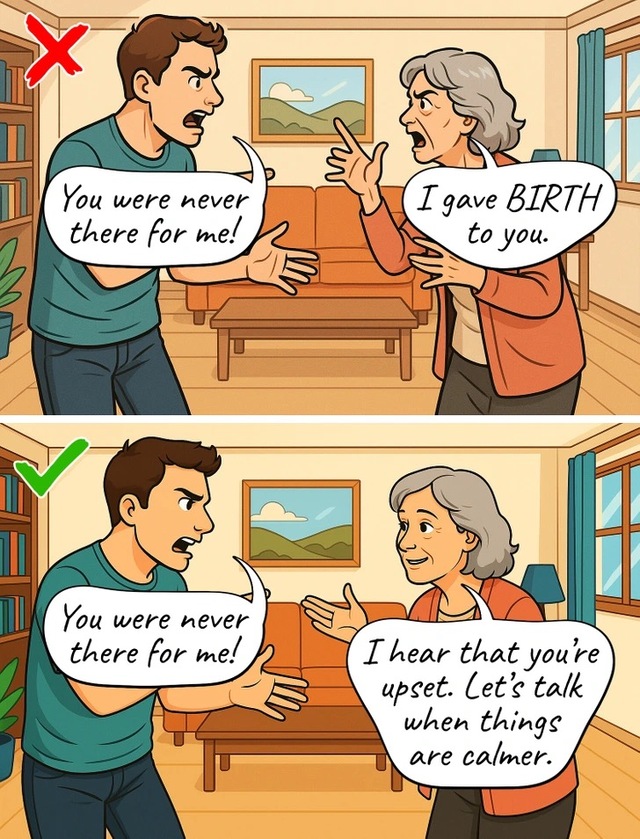
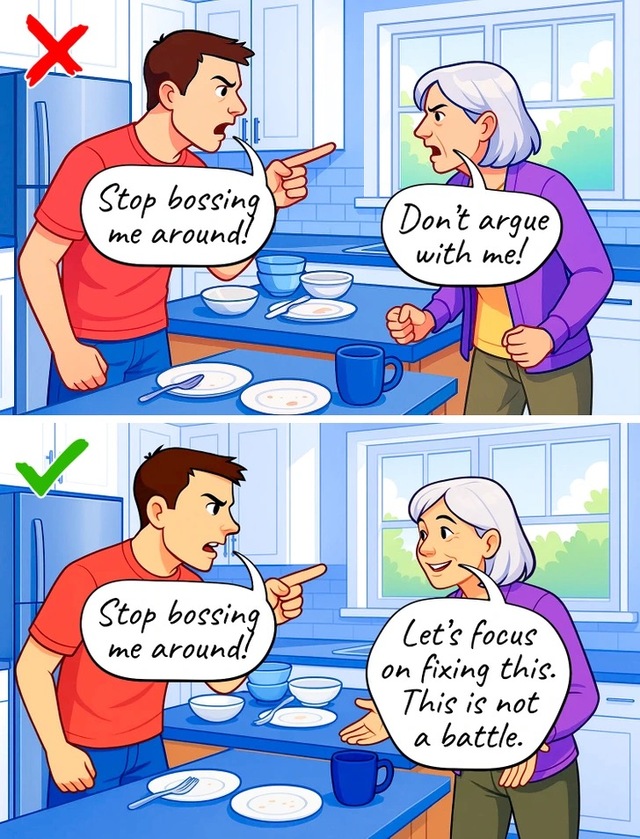
When an adult child attacks, the instinct is to defend. We want to explain our side, list our sacrifices, or match their volume. But fire cannot extinguish fire; it only provides more fuel.
Instead, master the “I” Statement. Instead of saying, “You are being incredibly rude,” try, “I feel disrespected when I am spoken to in that tone, and I don’t want to continue the conversation under these conditions.” It is remarkably difficult to argue with a feeling.
If the atmosphere becomes too heated, utilize the Power of the Pause. A simple, “We are both too upset to be productive right now; let’s revisit this in 24 hours,” can prevent words from being said that might take decades to forgive.
The Guilt Trap: Owning Your Past Without Being Its Prisoner

Every parent has a list of “I should have’s.” Maybe you were too strict, or perhaps you weren’t present enough during a pivotal year. It is healthy to reflect on your mistakes, but it is destructive to allow those mistakes to justify your child’s current abuse.
There is a difference between Parental Reflection and Productive Guilt. Reflection says, “I see where I messed up, and I will apologize for it.” Productive guilt says, “Because I messed up, I must accept whatever cruelty you throw at me.”
The latter is a fallacy. You can offer a sincere, heartfelt apology for the past without becoming a doormat in the present. Owning your part shows maturity, but your child’s choice to be disrespectful is a reflection of their character, not your history.
Radical Acceptance: Releasing the Ghost of the “Golden Child”

One of the hardest parts of this journey is mourning the child they used to be. You are often fighting with the memory of a sweet ten-year-old while standing in front of an angry thirty-year-old.
Radical Acceptance means acknowledging the person standing in front of you right now. You may not like who they have become, and you certainly don’t have to agree with their choices, but accepting the reality of their current personality allows you to stop being surprised by their behavior.
When you lower your expectations—not your standards for respect, but your expectations of their behavior—you stop setting yourself up for the same disappointment every Sunday afternoon.
The silence of a child can be louder than any argument, leaving a void filled with questions and heartache. If you are currently facing the wall of ‘no contact,’ watch this video to understand the psychology behind the silence and discover the first steps toward an emotional bridge
Reclaiming the “No”: Financial and Emotional Autonomy

In many cases of adult child disrespect, there is a lingering cord of dependence. Whether it’s cell phone bills, car insurance, or constant “emergency” loans, financial ties often complicate emotional boundaries.
It is time to realize that “No” is a complete sentence. You do not owe a five-paragraph essay explaining why you cannot lend money or why you cannot host a holiday dinner that always ends in tears.
Reclaiming your “No” is about reclaiming your autonomy. If your child realizes that their access to your resources (time, money, or energy) is tied to mutual respect, the power dynamic begins to shift back to a balanced, adult-to-adult level.
Strategic Distance: When the Healthiest Move is to Step Back
There is a profound difference between “abandoning” a child and “protecting” yourself. If every interaction leaves you feeling suicidal, depressed, or physically ill, strategic distance may be necessary.
This is the “Pause” vs. “Eject” concept. You aren’t cutting them out forever; you are taking a temporary leave of absence to regain your mental clarity. It is okay to say, “I need some space to process our last few visits. I’ll reach out when I feel ready.”
During this distance, you aren’t waiting for them to change; you are working on making sure you are strong enough that their behavior no longer defines your happiness.
The Parent’s Pivot: Putting Yourself Back on the Priority List

For twenty or thirty years, your life revolved around being a parent. When that role becomes a source of pain, it can feel like your entire world is collapsing. This is why the “Parent’s Pivot” is vital.
You must find an identity outside of your child’s opinion of you.
- Seek Your “Me Too”: Join support groups or talk to a therapist who specializes in family dynamics. Realizing you aren’t alone is a powerful tonic for shame.
- Rediscover Joy: What did you love before you were a parent? Whether it’s gardening, traveling, or learning a new language, pour that “parenting energy” back into yourself.
Filling your own cup isn’t selfish; it’s a prerequisite for surviving the storm of family conflict.
Final Thoughts: The Path to a New Foundation
Navigating disrespect from an adult child is one of life’s most grueling emotional marathons. It tests your patience, your memory, and your very sense of self-worth. But as you navigate this path, remember this: You are more than the sum of your child’s words.
You cannot control their heart, their anger, or their choices. You can only control your response and the environment you allow yourself to live in. By setting boundaries, communicating with calm strength, and reclaiming your own life, you aren’t giving up on your child. You are simply refusing to give up on yourself.
Healing may take time, and the relationship may never look the way you dreamed it would—but a life built on self-respect is always a life worth living.