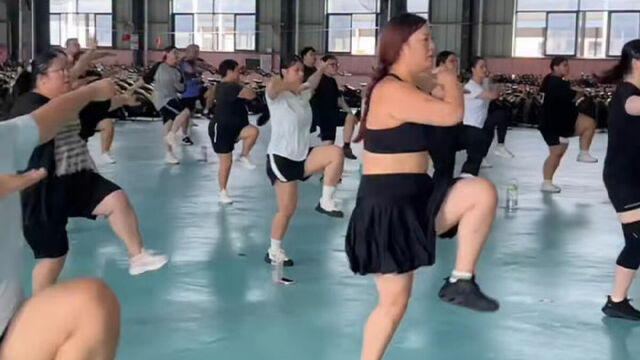
What happens when your desire to change your body leads you to a facility surrounded by concrete walls, guarded by security 24/7, and reinforced with electric wiring? For Australian content creator TL Huang—known to her followers as Eggeats—this wasn’t a hypothetical question. It was her reality for an entire month.
Recently, Huang’s documentation of her time in a Chinese “slimming camp” went viral, sparking a global debate. Is this the ultimate discipline required for weight loss, or is it a modern form of state-sanctioned torture? By documenting her journey, Huang has pulled back the curtain on an extreme industry that is rapidly expanding across East Asia.
The Gates of Guangzhou: An Australian’s Descent into Confinement
TL Huang made history as reportedly the first Australian to voluntarily sign up for a rigorous 28-day regime at a facility in Guangzhou, China. But this was no luxury wellness retreat. Upon arrival, the atmosphere was immediately stark. The compound was not designed for comfort; it was designed for containment.
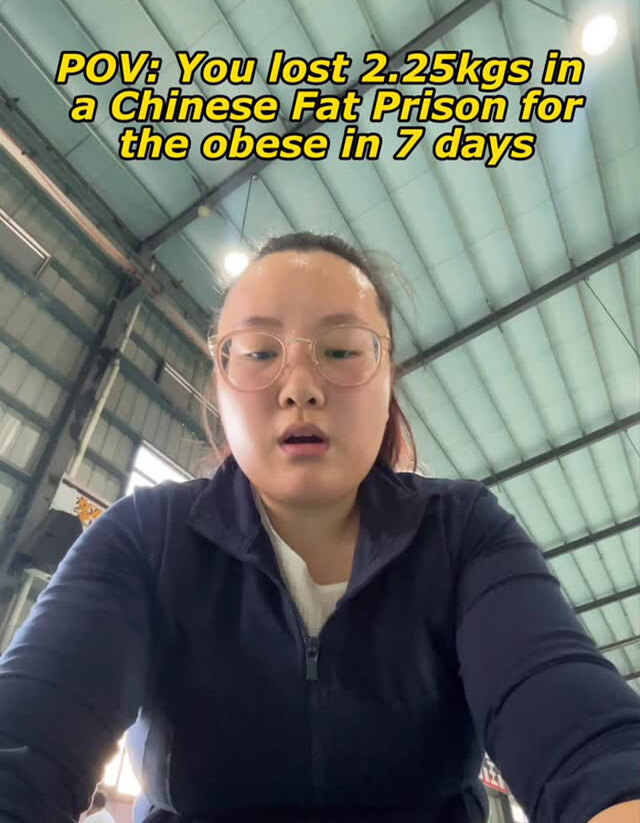
With a price tag of roughly $600, the package promised a total lifestyle reset. However, the first “lesson” in discipline began at the entrance. Security guards stood watch at steel gates, and any “contraband”—specifically unhealthy snacks or instant noodles—was confiscated on the spot. For Huang, the realization hit quickly: she wasn’t just checking into a gym; she was entering a system where her autonomy was surrendered at the door.
Xem bài viết này trên Instagram
The 28-Day Sentence: Life Inside the Concrete Walls
Life inside the “fat prison” was defined by a complete lack of luxury. Accommodation consisted of shared dormitories, where Huang shared a room with four other women. The amenities were functional at best: a personal desk, a locker, and access to shared showers and squat toilets.

The nutritional aspect was equally rigid. Meals were strictly portion-controlled, prepared by staff, and served on stainless steel trays reminiscent of a high-security penitentiary. There were no menus and no second helpings. To ensure no one cheated the system, the institution enforced mandatory weigh-ins twice a day—once in the morning and once at night. This constant surveillance created a psychological environment where the scale became the ultimate judge of one’s worth and progress.

Military Precision: The Grinding Routine of the ‘Fat Prison’
The core of the program was a relentless, military-style training regime. Participants were expected to perform three to four hours of high-intensity exercise every single day. The schedule was a grueling rotation of:
- HIIT (High-Intensity Interval Training)
- Boxing and Cardio
- Nightly Spinning Classes
“You’re not allowed to leave the area without valid reasons,” Huang explained in her viral videos. The gates remained closed 24/7 to prevent participants from “sneaking out” to find food or escape the physical demands. Every hour was regimented, leaving no room for personal choice or rest beyond what was scheduled. For someone who had not worked out in nearly two years, the transition from a sedentary life to four hours of daily “torture” was a shock to the system.

The Breaking Point: When the Body Finally Rebels
By the fourth week, the extreme deficit in calories combined with the massive physical output led to a predictable, yet frightening, result: total physical collapse. Huang documented herself falling ill with the flu midway through the program.

Even while sick and “miserable,” the pressure to maintain the routine did not cease. In one of her most controversial clips, Huang is seen weighing her small lunch portion despite being clearly unwell and lacking energy. Eventually, she had to be rushed to a hospital for treatment. “It’s not that fun anymore,” she told her followers. “Now I am sick and miserable and have no energy.” This moment served as a grim reminder that while the mind may be willing to “force” a routine, the human body has biological limits that cannot be ignored.

Xem bài viết này trên Instagram
Medical Ethics vs. Results: The Social Media Firestorm

The reaction to Huang’s journey was polarized. On one side, some viewers praised the camp for providing the “tough love” and structure that modern life lacks. They argued that for those struggling with obesity, such extreme measures are a necessary “reset.”
However, medical professionals and critics were horrified. Many branded the camps “medically unhealthy” and “torture.” The primary concern among experts is the “rebound effect.” When the body is forced into a survival state through extreme caloric restriction and over-exercise, it often gains the weight back—and more—once the person returns to a normal environment. Critics argue that these camps teach temporary suffering rather than sustainable health habits.

A Growing Industry of Desperation: China’s ‘Slimming’ Boom
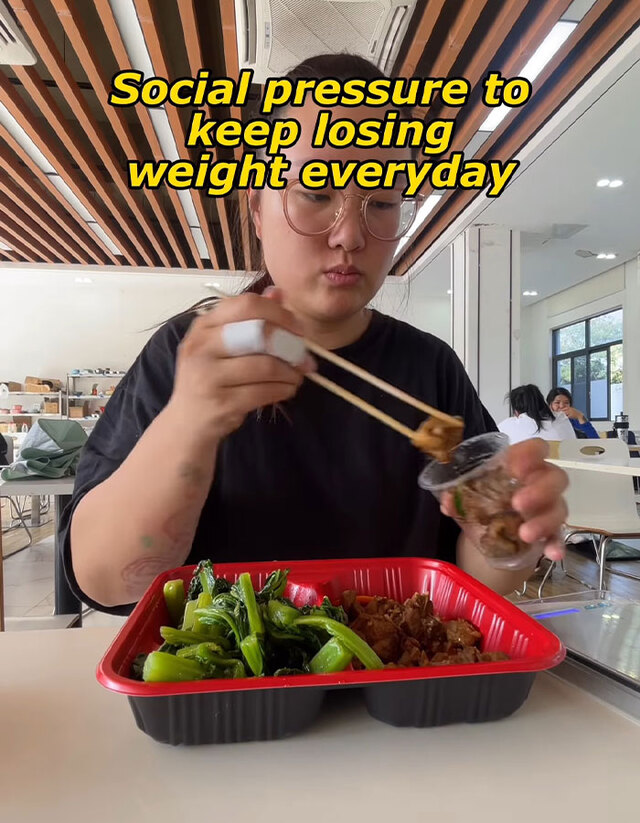
Why are these facilities so popular? The answer lies in China’s rapidly changing demographics. As obesity rates rise, so does the social pressure to remain thin. Reports suggest there are now over 1,000 “fat prisons” operating across the country, ranging from government-backed centers to private enterprises.
This industry thrives on the cultural drive for perfection and the desperation of individuals who feel they have failed at traditional weight loss. For many, the $600 fee is a small price to pay for the “guarantee” that they will be forced to lose weight through sheer confinement and physical labor.

Final Thoughts: The Heavy Cost of a 6kg Loss
By the end of her 28-day sentence, TL Huang had lost 6 kilograms (approx. 13 lbs). For her, the experience was a personal victory. She felt “liberated and rewarded” because she completed the challenge she set for herself. She credited the camp with helping her build a more consistent daily routine that she maintains today.
However, the “Story News” here isn’t just about the weight lost; it’s about the method used to lose it. Huang’s journey raises a haunting question for the digital age: Is health something that can be found in a prison cell? While she found her “amazing first step,” the imagery of sick participants weighing eggs behind locked gates suggests that for many others, these camps may be a step toward something far more damaging.