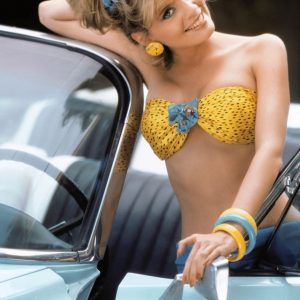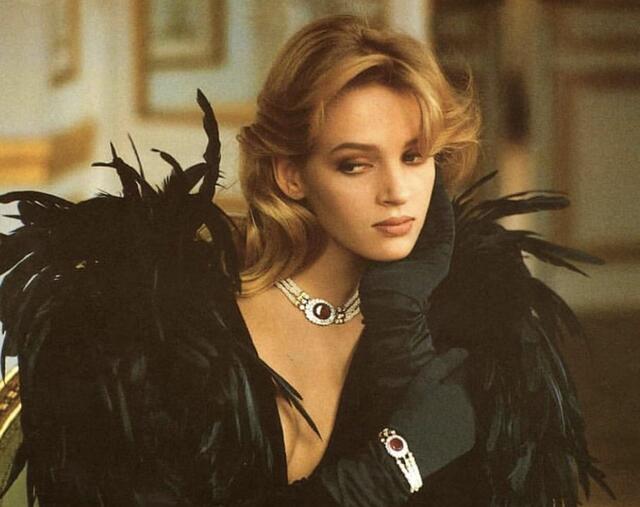
In the landscape of Hollywood, names often come and go with the changing seasons. Yet, every few decades, a performer emerges who doesn’t just fit into the industry but fundamentally shifts its gravity. Uma Thurman is that rare cinematic alchemist. Known for her statuesque beauty, sharp intellect, and a “fearless” approach to character, she has navigated a career that bridges the gap between high-art intellectualism and bone-crunching blockbuster action.
From her roots in a spiritually eclectic household in Boston to her status as a global icon, Thurman’s journey is a blueprint for resilience. She has survived the fickle nature of fame by constantly evolving, proving that a true leading lady is defined not by her youth, but by her grit, her choices, and her unwavering authenticity.
Roots of an Intellectual Artist: A Non-Ordinary Upbringing
Uma Karuna Thurman was born on April 29, 1970, into a world that was anything but conventional. Her father, Robert Thurman, was a renowned scholar of Indo-Tibetan Buddhist studies, and her mother, Nena von Schlebrügge, was a celebrated high-fashion model. This intersection of deep philosophy and visual aesthetics provided Uma with a unique childhood environment—one filled with literature, global culture, and a sense of spiritual curiosity.
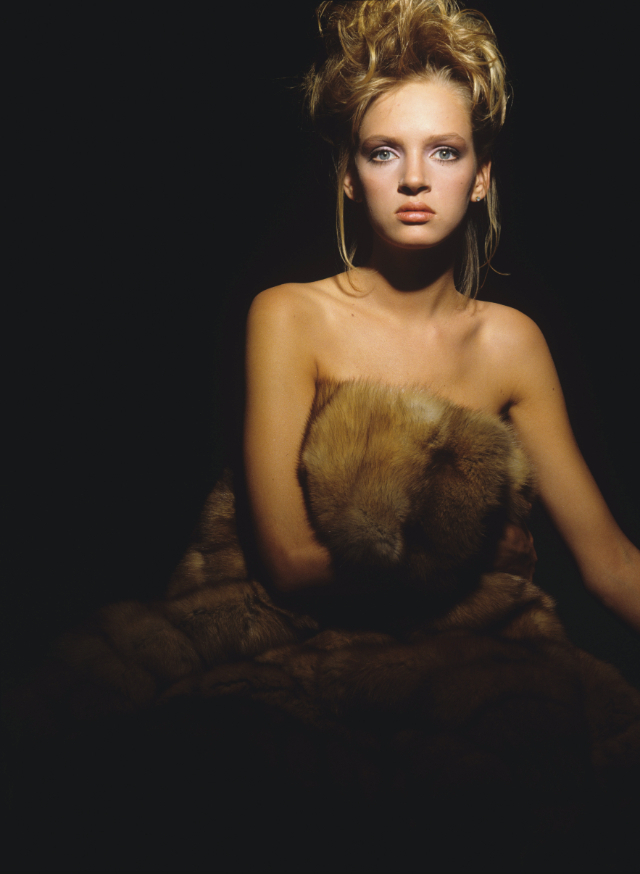
Despite this rich background, Uma’s teenage years at Northfield Mount Hermon School were marked by the same insecurities that plague many. Standing tall and possessing a “unique aura” that made her stand out, she initially felt awkward about her appearance. However, those very features—the height, the gaze, the presence—became her greatest assets. By age 15, she made the bold leap to New York City to pursue modeling, but her heart was already set on the transformative power of acting.
@nacreabeauty Uma Thurman, Venus. Vénus incarnée, l’énergie féminine qui crée, aime et guérit. Douce mais puissante, infiniment femme. 🔱 #femme #venus #umathurman #énergieféminine #femmefatale ♬ Love story orchestra – Royals&Media
The Breakthrough: From Aristocratic Drama to a Cultural Revolution
Uma’s transition from the fashion runway to the silver screen was remarkably swift. Her true arrival occurred in 1988 with the critically acclaimed Dangerous Liaisons. Playing Cécile de Volanges, she held her own alongside titans like Glenn Close and John Malkovich. Critics were immediately struck by her ability to portray a delicate aristocrat while hinting at a deep, burgeoning inner strength.
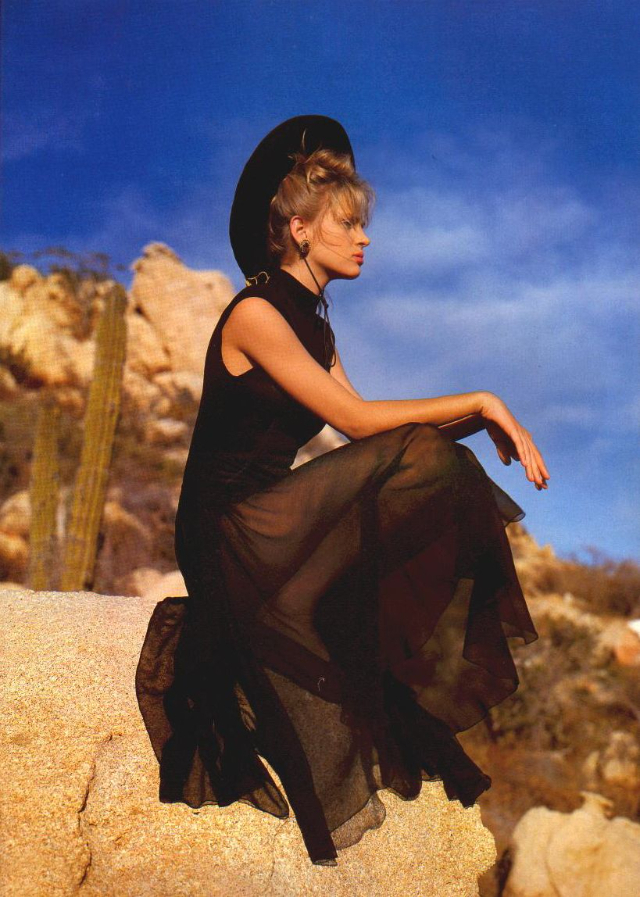
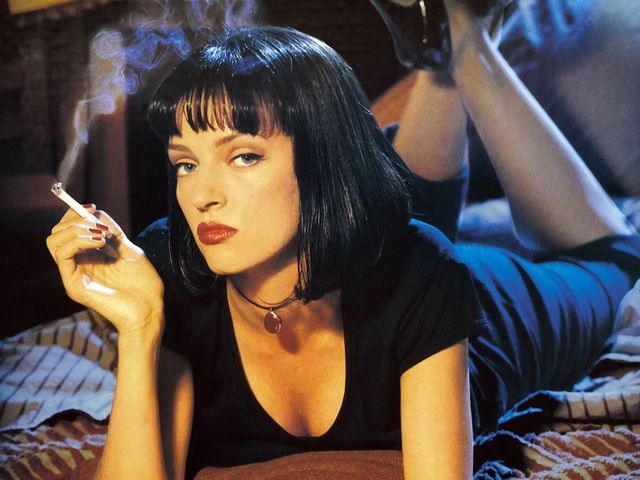
However, the year 1994 changed everything. When Quentin Tarantino cast her as Mia Wallace in Pulp Fiction, he didn’t just give her a role; he gave the world an icon. With her dark bob and enigmatic wit, Mia Wallace became the face of 90s cool.
The legendary dance sequence with John Travolta, set to the tune of “You Never Can Tell,” remains one of the most analyzed and imitated moments in film history. The role earned her an Academy Award nomination and established a creative partnership with Tarantino that would eventually produce some of the most visceral cinema of the 21st century.
@ngalitzine you handle the bat and bird! ♡ this movie is full camp… did i mention i’m poison? ⭐️ #batman #umathurman #chrisodonnell 🥹😍#batmanandrobin #poisonivy ♬ original sound – ☆
The Bride’s Vengeance: Forging an Action Legend
Nearly a decade after Pulp Fiction, the Tarantino-Thurman duo reunited for the Kill Bill saga (2003–2004). This wasn’t just another action movie; it was a grueling test of Thurman’s physical and emotional range. As “The Bride,” a vengeful assassin left for dead, Uma delivered a performance that redefined the “action hero” archetype.
Clad in the now-iconic yellow tracksuit, she navigated expertly choreographed fight scenes while maintaining a heart-wrenching sense of maternal loss. The Kill Bill films transformed her into a symbol of feminine power and vengeance, proving that a woman could lead a high-octane martial arts epic with both lethal precision and profound vulnerability.
A Genre-Defying Portfolio: The Art of the Pivot
What truly sets Uma Thurman apart is her refusal to be “boxed in.” While many stars stick to a winning formula, Thurman’s filmography is a tapestry of eclectic choices. In the 1997 science-fiction drama Gattaca, she provided a nuanced, icy performance that explored the ethics of genetic manipulation. That same year, she pivoted to play the sultry, campy, and dangerously charismatic Poison Ivy in Batman & Robin, proving she could lean into the theatrical and the absurd with equal commitment.
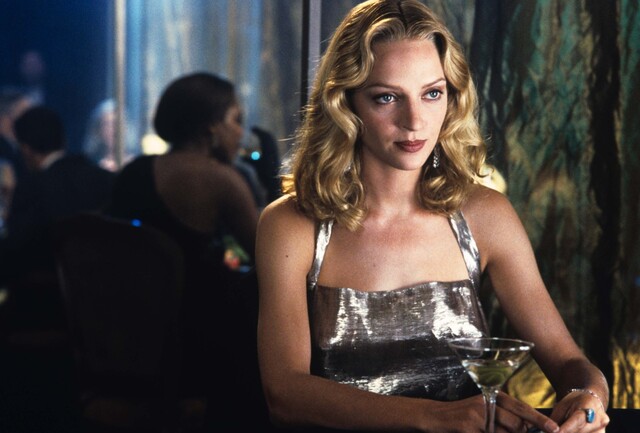
Her range extended further into romantic comedies like The Truth About Cats & Dogs and the high-energy musical world of The Producers (2005). Whether she was a femme fatale, a grieving mother, or a comedic lead, Thurman brought a consistent sense of truth to her characters, ensuring that even in the most fantastical settings, her performance felt grounded and real.

@r0sseiva Like mother like daughter #umathurman #mayahawke #killbill #strangerthings #rosseiva ac:@davizao 𖤓 ♬ original sound – 𝓡𝓸𝓼𝓮𝓵𝔂𝓷
The Personal Narrative: Strength in Transition
Behind the scenes, Uma’s life has been as dynamic as her career. Her high-profile marriages to Gary Oldman and later to Ethan Hawke were subject to intense public scrutiny. Yet, following her divorce from Hawke in 2005, she demonstrated a quiet resilience, focusing on raising her children—Maya, Levon, and later Luna—while maintaining a steady professional presence.
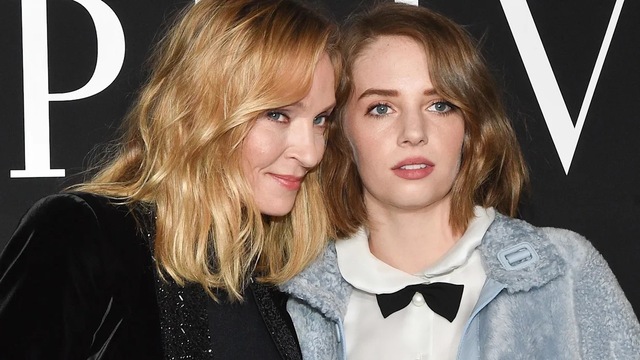
The legacy continues through her daughter, Maya Hawke, who has successfully entered the acting world, carrying forward the blend of intellect and talent that defines the family name. Uma’s ability to navigate the complexities of motherhood and a demanding career in the public eye has made her a figure of admiration for women everywhere.
Modern Maturity: Thriving in the Digital and Indie Spaces
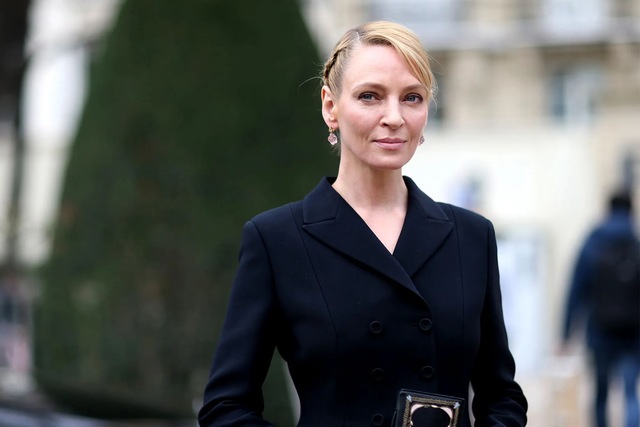
In recent years, Uma has embraced the evolution of entertainment. She successfully transitioned to prestige television, delivering sharp performances in The Slap and the thriller series Suspicion. Her willingness to work in both indie projects like Wes Anderson’s The French Dispatch and thrillers like The Kill Room (2023)—where she reunited with Samuel L. Jackson—shows an artist who is still hungry for challenge.
Beyond acting, Thurman has become a powerful advocate for change. She has used her platform to speak out on gender equality and workplace safety, helping to shed light on systemic issues within the entertainment industry. Her advocacy is a reflection of her commitment to a more equitable future for the actors who will follow in her footsteps.
@starevolution1 Uma Thurman through the years #umathurman #evolutionchallenge #throughtheyears #fyp ♬ Cheri Cheri Lady – Modern Talking
Final Thoughts: The Indelible Mark of Uma Thurman
Uma Thurman’s impact on cinema is far more than the sum of her box office hits. She is an icon because she represents the power of perseverance. From an insecure teenager in Boston to the “Bride” of global cinema, she has redefined what it means to be a leading lady in the modern era.
Her legacy is one of bold choices. She chose the difficult path over the safe one, and in doing so, she created characters that will be studied for generations. As she continues to take on new projects and use her voice for advocacy, Uma Thurman remains a shining example of artistry, resilience, and grace. She is a reminder that in the world of storytelling, the most transformative power is the courage to stay true to oneself.